 Nomad EN
 How to Pay Rent, Your House Cleaner, or Bolepix Bills in Brazil Without a CPF
· 6 min
A tourist already runs into this — struggling to get access to Pix in the first place. However, mainstream tourist venues are used to dealing with foreigners and tend to be prepared: they’ll have a card machine, or someone who can process an international card, or a workaround they’ve used a hundred times before. It’s friction, not a wall.
Digital nomad life is different. Somewhere between week two and week four, your days stop looking like a trip and start looking like a routine: you’re not checking into hotels anymore, you’re renting an apartment. You’re not eating out every meal, you’re shopping at the feira (street market). You’re not tipping a tour guide once, you’re paying the same faxineira (house cleaner) every other Friday. And none of these people are set up for a foreigner. Your landlord isn’t. The feira vendor isn’t. Your faxineira or personal trainer definitely aren’t.
The reason is simple: Pix, by design, belongs to people with a Brazilian bank account, which requires a CPF — the Brazilian tax ID that foreigners don’t have. Tourist spots build workarounds around that gap because gringos are their business. Daily life doesn’t, because you’re not the market a faxineira or a landlord is built for — you’re just the one guy who happens to need something different. This is what that gap actually looks like month to month, and why it catches so many nomads off guard.
What is Bolepix, and why does it show up on almost every bill?
Bolepix is an unofficial term that mixes the words “boleto” and “Pix.”
Boleto bancário is one of Brazil’s most traditional payment methods — a printed or digital bank slip with a unique barcode and numeric code. It plays a central role in recurring payments: utility bills, phone plans, and rent often list boleto as the primary — and sometimes only — payment option. Paying a boleto requires a Brazilian bank account — or, if you don’t have one, a trip to a lottery house (lotérica) to pay in cash.
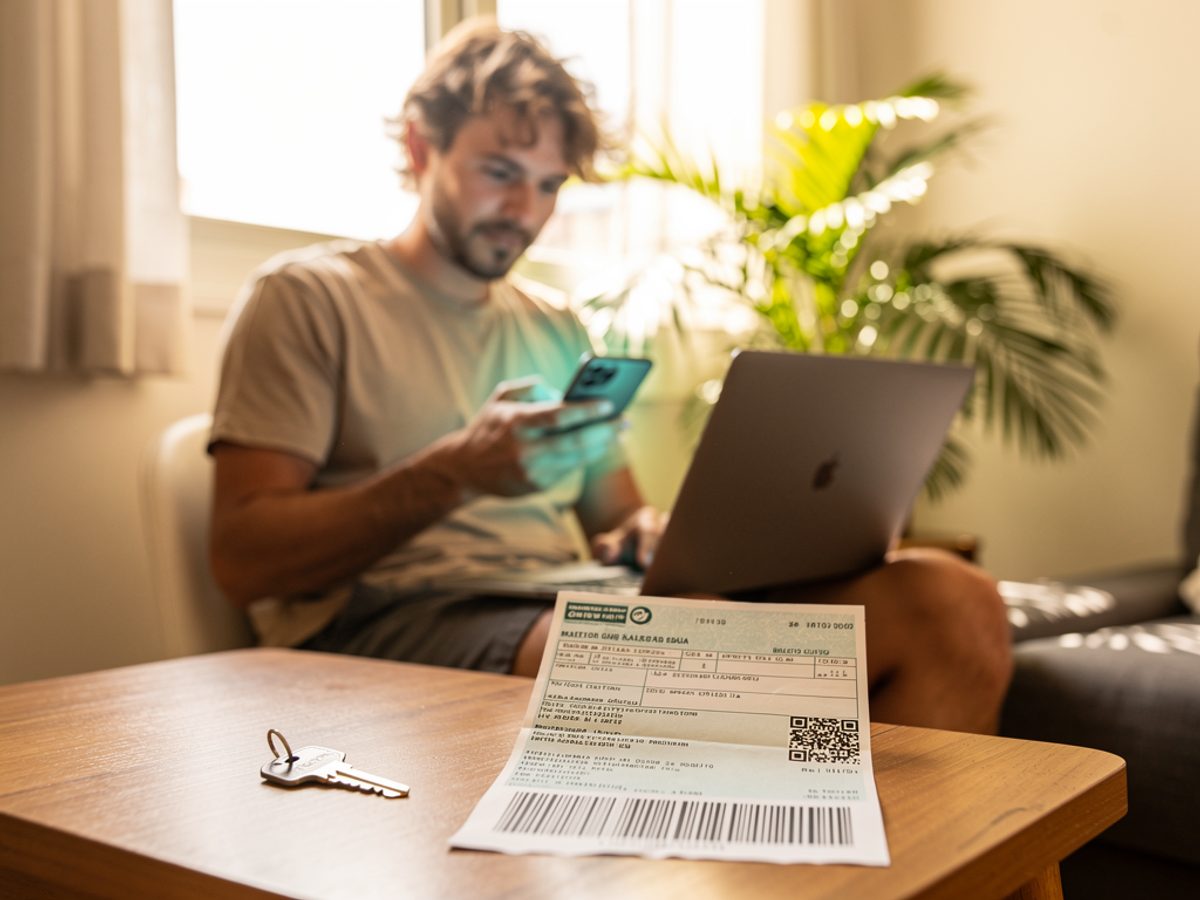
With Pix, payment collection now comes as a hybrid bill: it carries the traditional boleto barcode, plus a Pix QR code sitting next to it. And you can pay it with Pix! Since the Central Bank standardized the format in February 2025, it’s become the default way Brazil issues bills — rent receipts, utility bills, taxes, school fees, and gym memberships now routinely include one.
The data point that explains why this matters: boletos now account for less than 4% of retail payments in Brazil, while Pix moved R$35.36 trillion across 79.8 billion transactions in 2025 — 54.7% of every payment transaction in the country, according to the Central Bank of Brazil. If your payment method can’t scan a QR code, you’re locked out of more than half the economy.
What are the 5 payments every digital nomad in Brazil actually faces?
Forget the vacation budget. If you’re staying a season, this is what your month actually looks like:
- Rent — paid straight to your landlord’s personal Pix key, not a booking platform.
- The feira (street market) or just the sidewalk vendor selling mango on the corner. Most vendors run on Pix, not cash or card.
- A faxineira, personal trainer, or dog walker — independent workers who invoice you directly, with no card machine.
- Recurring bills — coworking, cellphone, internet, gym, school fees — increasingly issued as Bolepix.
- E-commerce and delivery apps — many checkout pages ask for a CPF when you pay by credit card, but not when you pay directly via Pix.
Can you pay rent in Brazil without a CPF?
Yes — not through Pix directly, since that requires a Brazilian bank account, but through Lokal. Lokal converts your foreign card into a Pix payment on the spot. Your landlord receives it exactly like any other Pix transfer; nothing changes on their end.
This matters because landlords in Brazil are individuals, not companies — they don’t have a card terminal, and they’re not going to set one up for a single foreign tenant.
How do you pay a faxineira (house cleaner) without a Brazilian bank account?
This is the group most nomads underestimate — not businesses, but independent workers who make daily life run and make you feel at home: the faxineira, the personal trainer, the gardener, the person who fixes your bike, and so on.
If your only payment method is a foreign card, you’re effectively asking these workers to make an exception for you — or asking a Brazilian friend to Pix them on your behalf. Neither is sustainable for a multi-month stay.
How does Lokal let you pay any Pix key without a CPF?
Lokal connects directly to the international card you already use at home, the one linked to the bank account your salary already lands in every month. Lokal lets you pay any Pix key in Brazil — a QR code, a phone number, an email, a random key. Not just businesses with a checkout page. People.
- Download the app and connect your card, Apple Pay, or Google Pay — takes under a minute.
- Scan any Pix QR code, or enter a phone number, email, or Pix key.
- Confirm the amount and fee shown upfront.
- The recipient gets paid instantly, in reais, exactly as if it came from a Brazilian account.
No CPF, no Brazilian bank account, no pre-loading a wallet, no monthly top-up — you’re paying directly off the card your salary already lands in.
Download Lokal and pay rent, the feira, and your faxineira like you actually live here.
FAQ
Do I need a CPF to pay with Pix in Brazil? No — with Lokal you don’t need a CPF (Brazilian tax ID). You can pay any existing Pix key or QR code through the app, which converts your foreign card into a Pix payment.
What is Bolepix? Bolepix is a hybrid bill combining a traditional boleto barcode (payment slip) with a Pix QR code. Utilities and subscriptions have historically run on boletos, which required a Brazilian bank account to pay. With the growing presence of Bolepix, Pix is now offered as an alternative payment method on most of these bills.
Can tourists use Pix too, or is this only for long-term nomads? Both. Tourists face the same problem on a shorter timeline — kite instructors, beach vendors, and taxi drivers who only take Pix. The same app that handles your rent and faxineira works for a two-week trip.
Is it safe to pay a stranger’s Pix key with a foreign card? Every Pix key in Brazil is registered with the Central Bank, so before you confirm any payment, the app automatically looks up who that key belongs to and shows you their registered name. If the name doesn’t match who you expect to be paying, you’ll see it right away and can back out before sending anything. Pix also settles instantly and pays the recipient directly — there’s no intermediary holding your money in a wallet along the way.
Can I pay individuals, not just registered businesses? Yes — Pix keys belong to people as often as to businesses, and Lokal supports both.
Sources: Banco Central do Brasil (2025 Pix statistics); Sebrae / Instituto Ipespe, “Hábitos Financeiros dos Pequenos Negócios”; O Povo; Stark Bank.
More questions about limits, refunds, or account security? Check our full FAQ.
Write to us
Got a Brazil payment story, question, or something we missed? Any valuable tips to travel in Brazil? We'd love to hear it. Send us an email at hello@lokal-app.com.