
 Guide EN
 Best Places to Travel in Brazil: The 10 Destinations That Show Off the Country's Diversity
· 8 min
The best places to travel in Brazil are Rio de Janeiro, Salvador, Chapada Diamantina, Lençóis Maranhenses, Jericoacoara, Paraty, the Pantanal, the Amazon, Iguaçu Falls, and Serra da Bocaina. Together, these ten destinations cover the five kinds of trip Brazil offers — city, culture, hiking, beach, and wilderness — without repeating the same experience twice. Below is what to see, when to go, and how much time to set aside for each one.
What are the best places to travel in Brazil?
- Rio de Janeiro — the ideal base to start any itinerary, with Christ the Redeemer, Sugarloaf Mountain, and a city life squeezed between mountains and sea.
- Salvador (Bahia) — the capital of Afro-Brazilian culture, home to capoeira, candomblé, and the historic Pelourinho district.
- Chapada Diamantina — multi-day hikes through canyons, waterfalls, and tabletop plateaus in inland Bahia.
- Lençóis Maranhenses — white sand dunes dotted with freshwater lagoons, in Maranhão.
- Jericoacoara — a beach village in Ceará known for its dunes, kitesurfing, and sunsets.
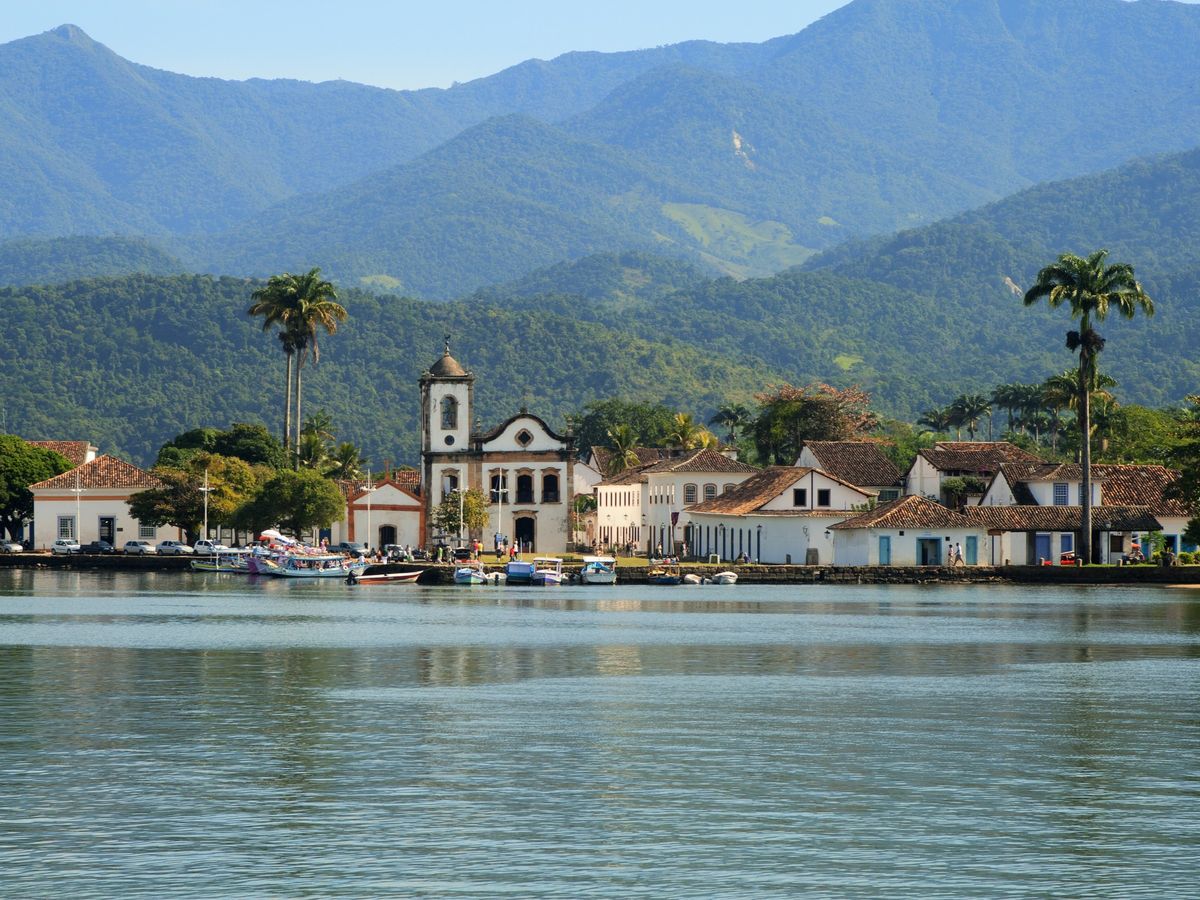
- Paraty — a colonial town wedged between the Serra do Mar mountains and the ocean, on the Rio de Janeiro coast.
- The Pantanal — the largest continuous wetland on the planet and one of the best places in the world to spot wildlife.
- The Amazon — the largest tropical rainforest in the world, explored from Manaus and the Rio Negro.
- Iguaçu Falls — around 275 individual waterfalls on the border between Brazil and Argentina.
- Serra da Bocaina — high-altitude Atlantic Forest trails in inland Rio de Janeiro state.
1. Rio de Janeiro: city, mountain, and sea in one trip
Rio handles most of the international flights landing in Brazil, which makes it the natural starting point for nearly every itinerary. Beyond Christ the Redeemer and Sugarloaf Mountain, it’s worth setting aside time for the historic downtown and neighborhoods like Santa Teresa. Rio is also the gateway to the Costa Verde, the region that connects it to Paraty through the Atlantic Forest.
2. Salvador: where Afro-Brazilian culture takes center stage
Founded in the 16th century, Salvador is one of the birthplaces of Afro-Brazilian culture. Walking through Pelourinho, watching a capoeira circle, or attending a candomblé ceremony reveals a side of Brazil that beach-focused itineraries miss entirely. According to Brazil’s National Historic and Artistic Heritage Institute (IPHAN), Salvador’s Historic Center has been a UNESCO World Heritage Site since 1985 — recognition that underlines the region’s historical value well beyond tourism.
3. Chapada Diamantina: the Northeast’s hiking destination
Made up of mountains, canyons, and tabletop plateaus in inland Bahia, Chapada Diamantina packs in hundreds of waterfalls and multi-day trails with overnight stays in local villages. It’s proof that Brazil goes far beyond its beaches and holds its own against other trekking destinations in South America.
4. Lençóis Maranhenses: dunes and lagoons in the Northeast
In Maranhão, Lençóis Maranhenses forms a roughly 100-km stretch of white sand dunes along the Atlantic coast. After the rainy season, between June and September, thousands of freshwater lagoons form between the dunes — the best window to visit and see them full.
5. Jericoacoara: beach, dunes, and wind
A former fishing village in Ceará, Jericoacoara now draws travelers chasing kitesurfing, windsurfing, and one of the country’s most photographed sunsets. Freshwater lagoons and dune buggy rides round out the trip.
6. Paraty: colonial heritage between mountains and sea
Paraty preserves cobblestone streets and baroque churches from the 17th and 18th centuries, historically tied to the old Gold Route that carried gold from the mines of Minas Gerais to the coast. The town also gives access to islands, waterfalls, and trails through the Atlantic Forest.
7. The Pantanal: Brazil’s biggest wildlife sanctuary
The Pantanal has been recognized by UNESCO as a Natural World Heritage Site and Biosphere Reserve since 2000, and is considered the largest continuous wetland on the planet. It’s one of the few places in the world where jaguars can be spotted in their natural habitat, alongside hyacinth macaws, caimans, and capybaras. The best time for wildlife viewing is the dry season, between May and September, when animals concentrate near rivers.
8. The Amazon: the world’s largest tropical rainforest
From Manaus, travelers can cruise the Rio Negro, sleep in a hammock to the sound of the forest, and visit riverside communities. The Amazon holds the largest continuous stretch of tropical rainforest on the planet, which makes the local immersion experience unlike anything else Brazil’s nature destinations offer.
9. Iguaçu Falls: nature’s power on the southern border
Around 275 individual waterfalls spread across nearly two miles, surrounded by subtropical rainforest. Iguaçu National Park has been a UNESCO Natural World Heritage Site since 1986, a title that recognizes both the landscape and the region’s biodiversity.
10. Serra da Bocaina: high-altitude trails near Rio
Serra da Bocaina National Park, inland from Rio de Janeiro, offers high-altitude trails through a mountain range dotted with waterfalls, plus stretches of the historic Estrada Real (Royal Road). It’s a good pick for travelers who already know Rio and want a rural, less-explored side of Brazil.
What’s the best time of year to travel to Brazil?
It depends on the region, since the country’s continental size means several climates are in play at once:
- Northeast (Salvador, Jericoacoara, Lençóis Maranhenses): best between September and January, with less rain and high temperatures year-round.
- Southeast (Rio de Janeiro, Paraty, Serra da Bocaina): April to October, outside the peak heat and humidity of summer.
- Amazon: June to November, the relative dry season, when rivers are lower and trails are more accessible.
- Pantanal: May to September, the dry season, ideal for wildlife concentrated near water sources.
- Iguaçu Falls: water volume tends to be higher between October and March, the region’s rainy season.
How much time do you need to see the main destinations?
An itinerary combining two or three of these destinations usually takes between 12 and 20 days, depending on the region:
- Rio, Costa Verde, and Paraty-focused trips: around 12 to 14 days.
- Rio, Chapada Diamantina, and Salvador combined: roughly 16 days.
- Trips combining the Amazon and the Northeast (Lençóis Maranhenses): 13 to 19 days.
- Larger crossings — Rio, Chapada Diamantina, and Iguaçu Falls, for example: around 20 days.
Since Brazil is a continent-sized country, moving between regions is usually done by plane, which preserves time for what actually matters: the experience at each destination.
How does payment work in Brazil for visitors from abroad?
The dominant payment method in Brazil today is Pix, the instant transfer system created by Brazil’s Central Bank in 2020. According to the Central Bank’s own data, Pix logged 36.3 billion transactions between January and May 2026, moving R$16 trillion — a growth of more than 26% compared to the same period the previous year. In practice, that means Pix shows up almost everywhere: from large hotel chains to small vendors in villages like those in Chapada Diamantina or Jericoacoara, where card machines aren’t always available.
The catch is that Pix, by default, requires a Brazilian bank account — something most foreign visitors don’t have. That leaves travelers relying on cash or international cards, which may not always work especially outside major cities.
That’s where Lokal comes in: the app lets you access and use Pix without a Brazilian bank account, so you can pay the way locals do — directly, without paperwork, and without depending only on cash. Download Lokal and bring Pix with you to any of the ten destinations on this list.
FAQ
What’s the best place to see Brazil for the first time? Rio de Janeiro is usually the best entry point, since it handles most international flights and serves as a base for exploring the Costa Verde and Paraty right afterward.
Can you visit the Amazon and the Pantanal on the same trip? Yes, but it takes planning, since the two regions are far apart and usually require domestic flights between them. Set aside at least 15 days to cover both comfortably.
Which places in Brazil are best for hiking? Chapada Diamantina and Serra da Bocaina are the country’s top references for multi-day trekking, with trails through canyons, plateaus, and waterfalls.
Do I need cash to travel around Brazil? Less and less. Since Pix launched, Brazil has been moving fast toward becoming a cashless country, and many Brazilians don’t carry cash anymore. Pix covers day-to-day transactions across the country — including in areas far from major cities. With an app like Lokal, you can cut your reliance on cash, even without a Brazilian bank account.
What’s the best time of year to plan a trip covering several regions? The months between May and September tend to work well for most destinations on this list, since they line up with the dry season in the Pantanal, the Amazon, and the Northeast, plus milder temperatures in the Southeast.
Want to go deeper on how to use Pix as a foreigner in Brazil? Also read: How to Pay in Brazil. And to bring Pix with you to any of the destinations on this list, download Lokal.
Questions about payments, limits, or how Lokal works before your trip? Check our full FAQ.
Write to us
Got a Brazil payment story, question, or something we missed? Any valuable tips to travel in Brazil? We'd love to hear it. Send us an email at hello@lokal-app.com.