
 News EN
 Pix: Brazil's Financial Revolution
· 4 min
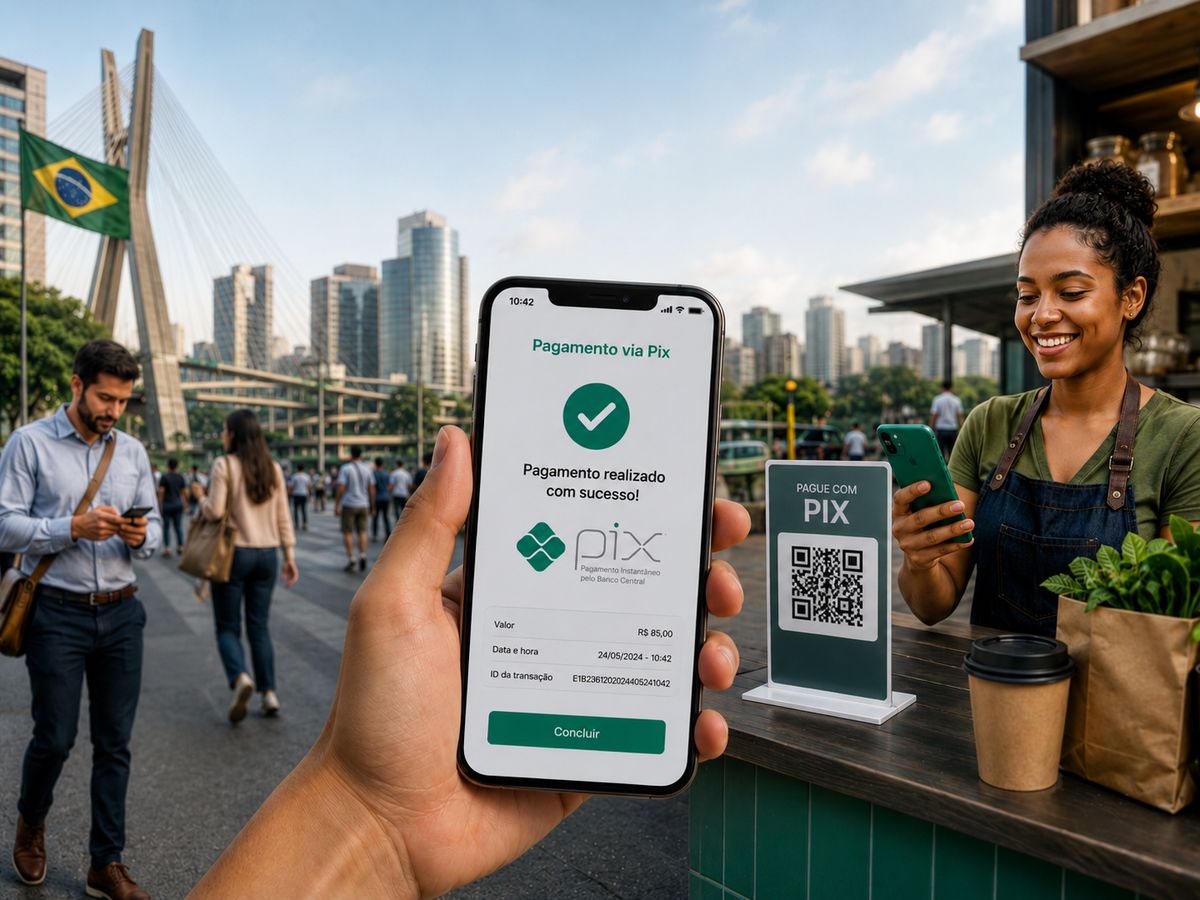
Pix is Brazil’s instant payment system, launched by the Central Bank in November 2020. It’s free for individuals, works 24/7, and has grown faster than any comparable payment system in the world — in 2025 alone, it processed R$35.36 trillion across 79.8 billion transactions, according to the Central Bank. Here’s how it happened, and why it matters, especially for anyone without a Brazilian bank account.
What existed before Pix?
Brazil is a continental-sized country with a long history of high inflation and economic instability. Yet paradoxically, its banking system has always been among the most technologically advanced in the world. Back in the early 2000s, Brazilians already had TED — near-instant bank transfers. The catch: it only worked during business hours, and it wasn’t cheap.
Before 2020, sending money between banks cost around R$10 per transfer on average. The minimum wage at the time was R$998. Sending R$100 to a friend could cost 10% of the amount in fees alone. The result was that millions of Brazilians stayed unbanked — why open an account if just using it costs money?
Then, in November 2020, the Central Bank launched Pix. Everything changed.
How did the Central Bank make Pix take off?
The technology — instant transfers, available 24/7, 365 days a year — wasn’t the real breakthrough. The strategy behind the rollout was.
- Zero fees for individuals. The Central Bank made Pix completely free for individuals who hold a Brazilian bank account. Send R$10, the other person receives R$10, full stop. Digitizing money without taxing every transaction sounds obvious, but no major Brazilian bank had ever done it voluntarily.
- Mandatory participation. Every bank above a certain size was legally required to join Pix — no opting out, no waiting to see if it would work. This gave Pix, from day one, the kind of network effect that normally takes years to build.
- A regulator-enforced UX standard. The Central Bank published a 164-page UX manual for banking apps. Among other rules, banks are required to show the Pix button on the first screen of their app — they can’t bury it in sub-menus to push users toward fee-generating products instead.
How big is Pix today?
The numbers, all from the Central Bank, tell the story on their own:
- In 2025, Pix processed R$35.36 trillion across 79.8 billion transactions — a 33.6% jump in volume over 2024.
- In the second half of 2025, Pix accounted for 54.7% of all retail payment transactions in Brazil — more than credit, debit, and prepaid cards combined (30.4%). This is more than a peer-to-peer transfers like Venmo or Wero; it’s how Brazilians pay at restaurants, supermarkets, and small businesses every day.
- Former Central Bank President Roberto Campos Neto has stated that 71.5 million Brazilians who had never used a digital transfer before entered the financial system through Pix.
- Overall banking access among Brazilian adults rose from 86.5% in 2017 to 96.4% in 2024, according to the Central Bank’s Financial Citizenship Report.
What does Pix’s dominance mean for foreign visitors?
Pix has become so central to daily life in Brazil that a small vendor in a village in Chapada Diamantina, a beach kiosk in Jericoacoara, or a taxi driver in Rio may simply not have a card machine — but will absolutely take Pix. For most Brazilians, that’s a non-issue. For a foreign visitor, it can turn into a real barrier: Pix, by default, requires a CPF (Brazilian tax ID) and an account with a Central Bank-authorized institution, which international travelers usually don’t have.
In practice, that means visitors are often left depending on cash or international cards, cut off from the very payment method that now runs most of the country’s day-to-day economy.
This is the gap Lokal was built to close. The app gives travelers access to Pix without requiring a Brazilian bank account, so visitors can pay the way locals do — directly, instantly, and without being left out of a system that now touches over half of all retail transactions in the country. Download Lokal and bring Pix with you.
FAQ
What is a Pix key? A Pix key is an alias to a bank account (like Wero uses a phone number as alias, or your IBAN in Europe). It can be a CPF, phone number, email, or a random key, used to send or receive Pix payments without typing in full bank account details each time.
Is Pix safe to use? Pix is regulated and monitored by the Central Bank, and includes fraud-prevention rules such as mandatory refund procedures for scams or operational failures. However, it is important to always check the amount and the identity of the beneficiary before validating a transaction.
How fast is a Pix transfer? Pix settles in seconds, any time of day, including weekends and holidays.
Curious how to actually get set up? Read next: How to Pay in Brazil. Or skip ahead and download Lokal to start paying with Pix in Brazil today.
More questions about limits, refunds, or account security? Check our full FAQ.
Write to us
Got a Brazil payment story, question, or something we missed? Any valuable tips to travel in Brazil? We'd love to hear it. Send us an email at hello@lokal-app.com.